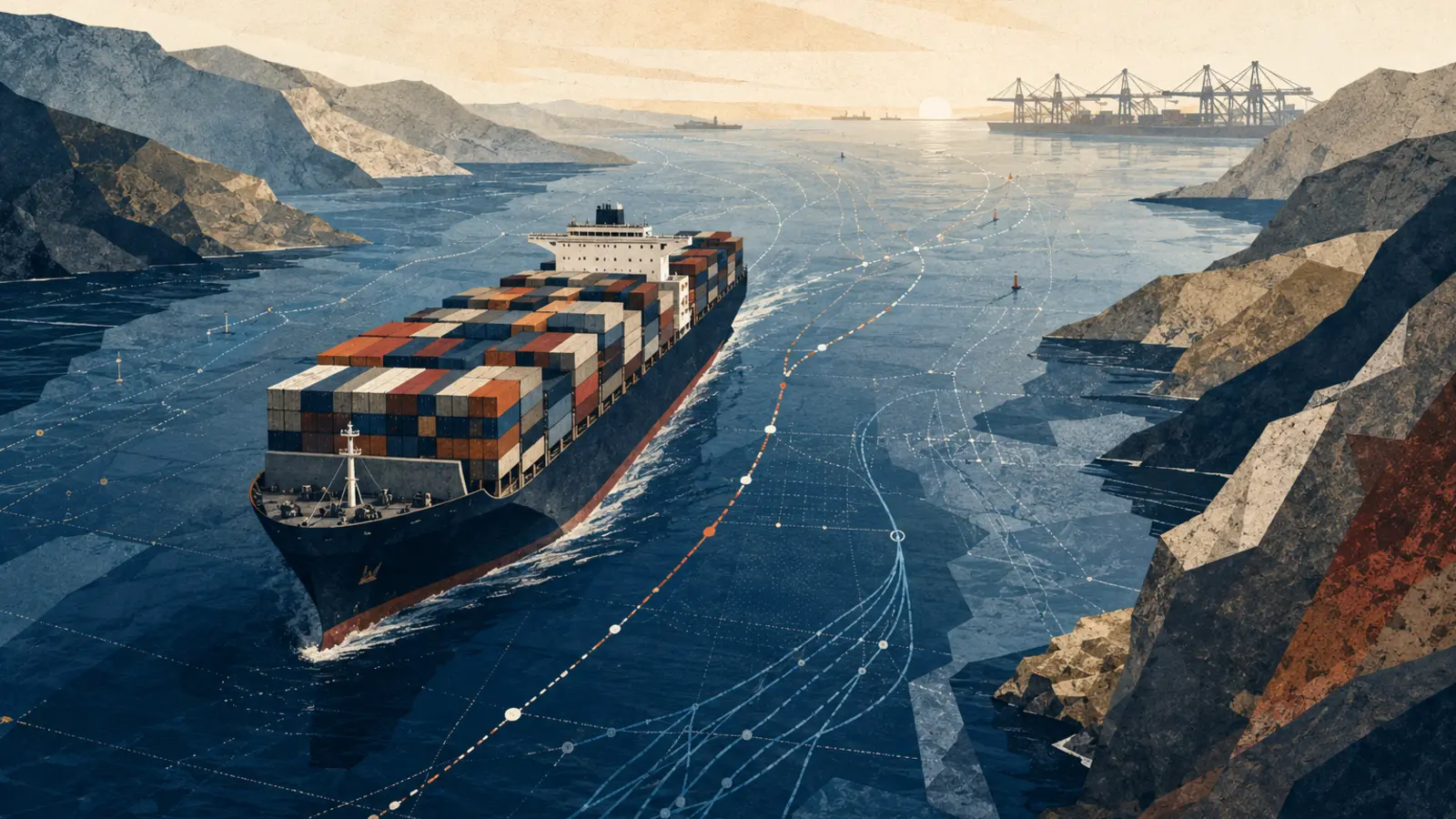
Commercial shipping in and around the Strait of Hormuz came under renewed pressure in July as the United States expanded its strikes inside Iran and the International Maritime Organization recorded fresh damage to merchant vessels. On 19 July, U.S. Central Command said it had completed a ninth consecutive evening of strikes. Its target list included military command centres, air-defence and coastal-surveillance sites, maritime capabilities, launch sites and communications networks. CENTCOM said the operation was intended to reduce Iran’s ability to attack commercial ships and their crews. The release states the command’s purpose and target selection. It provides no independent assessment of the damage.
The IMO’s incident register documents the harm to shipping. By 17 July, it listed 58 confirmed incidents in the Strait of Hormuz and the wider Middle East, with 17 seafarer deaths. Ships were damaged off Oman on 6, 7, 11, 13, 14 and 16 July. A crew member was reported killed aboard Al Bahyah on 14 July and another aboard GFS Galaxy on 11 July. Eleven people were injured and the crew abandoned Mombasa B. The register records locations, casualties, damage and pollution. It generally leaves responsibility for individual attacks undetermined.
Traffic returned, then violence resumed
The July attacks followed a short period of improving traffic. UN Trade and Development recorded more than 100 days of disruption after the military escalation that began on 28 February. A mid-June agreement between Washington and Tehran included reopening the strait. The U.S. Energy Information Administration later reported an increase in vessel movements. On 7 July, the agency revised its oil outlook on the assumption that production and trade would continue moving towards pre-conflict levels.
Events on the water soon challenged that assumption. CENTCOM said its strikes on 7 and 8 July followed Iranian attacks on three commercial vessels. Iran presented a different account in a formal submission circulated by the IMO. It said the strait had remained open, navigation had continued and its actions were necessary and proportionate measures of self-defence. The submission records Iran’s position. The IMO incident register, meanwhile, documents damaged ships and the interruption of an evacuation operation without assigning responsibility in most cases.
The consequences for crews were already extensive. By 16 July, the IMO said about 20,000 seafarers, port workers and offshore personnel had been affected by regional instability. About 6,000 seafarers were stranded aboard vessels that could not safely leave the Gulf. A voluntary IMO framework helped 136 vessels carrying an estimated 2,900 seafarers depart between 23 and 26 June. The operation was paused after another attack. Its suspension left thousands of people waiting aboard vessels while governments, shipowners and maritime organisations reassessed the route.
Navigation rules and commercial risk
The strait has an established traffic-separation scheme, proposed by Iran and Oman and adopted by the IMO in 1968. On 13 July, the IMO Council reaffirmed the right of transit through straits used for international navigation. It called for passage through the recognised lanes to remain non-discriminatory and free of tolls and charges. The Council also condemned attacks on civilian commercial ships and urged de-escalation.
Shipping decisions depend on the conditions crews and operators encounter, as well as the rules governments endorse. An agreement can restore traffic estimates quickly. Shipmasters, insurers and owners respond to reports of damaged hulls, casualties, pollution and available evacuation routes. Renewed incidents can reduce traffic even when no government has formally declared the route closed.
The volume of energy carried through Hormuz gives those decisions global consequences. In the first half of 2025, the strait carried an average of 20.9 million barrels of oil a day, about one fifth of global petroleum-liquids consumption, according to the EIA. UNCTAD found that the 2026 disruption had raised energy, fertiliser and freight costs. Its June assessment said those effects could persist after traffic resumed because transport prices and supply chains adjust more slowly than spot oil prices. It identified least-developed and small-island economies as particularly exposed because many import fuel and food while operating with limited fiscal room.
The missing maritime mechanism
The sequence since June shows what the reopening agreement failed to settle. Traffic increased. The public documents reviewed for this article describe no agreed process that could reliably attribute attacks, coordinate evacuations and preserve commercial passage after a disputed incident. The IMO could record damage and organise departures. It could not compel the belligerents to accept a common account of what had happened.
CENTCOM’s stated target list focused in part on launch sites, maritime capabilities and coastal surveillance. The documents reviewed here leave several civilian maritime functions unresolved: mine clearance, incident investigation, insurance cover, communication among coastal states and predictable access for international maritime officials. Those functions require continuing coordination after an operation ends.
A maritime agreement would therefore have to specify practical arrangements. Ships need direct notification channels and clear separation from military traffic. Investigators need prompt access to damaged vessels and incident locations. The IMO needs enough security to resume evacuation work. Crews also need a dependable way to leave the region. Each provision could be negotiated without resolving every dispute in the wider conflict. Negotiation would still require cooperation from the states and forces operating around the strait.
As of 20 July, vessels were moving through Hormuz and the IMO was still recording deaths, injuries and damage. About 6,000 seafarers remained stranded when the organisation issued its 16 July update. The immediate measures of any durable improvement will be the resumption of safe departures, a decline in new incidents and continued commercial traffic after the next disputed event.